Tags
AI is already influencing more than how people discover brands and find information; it’s playing a growing role in what they buy, too.
Research from our recent State of AI Search report, covering 1.5 million AI search-engaged sessions, found a 553% year-on-year increase in transactions and 312% growth in revenue attributed to AI visitors.
The data shows how AI-assisted discovery is already translating into commercial opportunity. And while businesses work out what that means for their sales and marketing strategies, the platforms are changing how people search, compare products, and make decisions.
For brands, understanding the information customers encounter, the products they're shown, and the recommendations they receive can all shape their decisions before they've even visited a brand's website.
1. OpenAI launched GPT-6
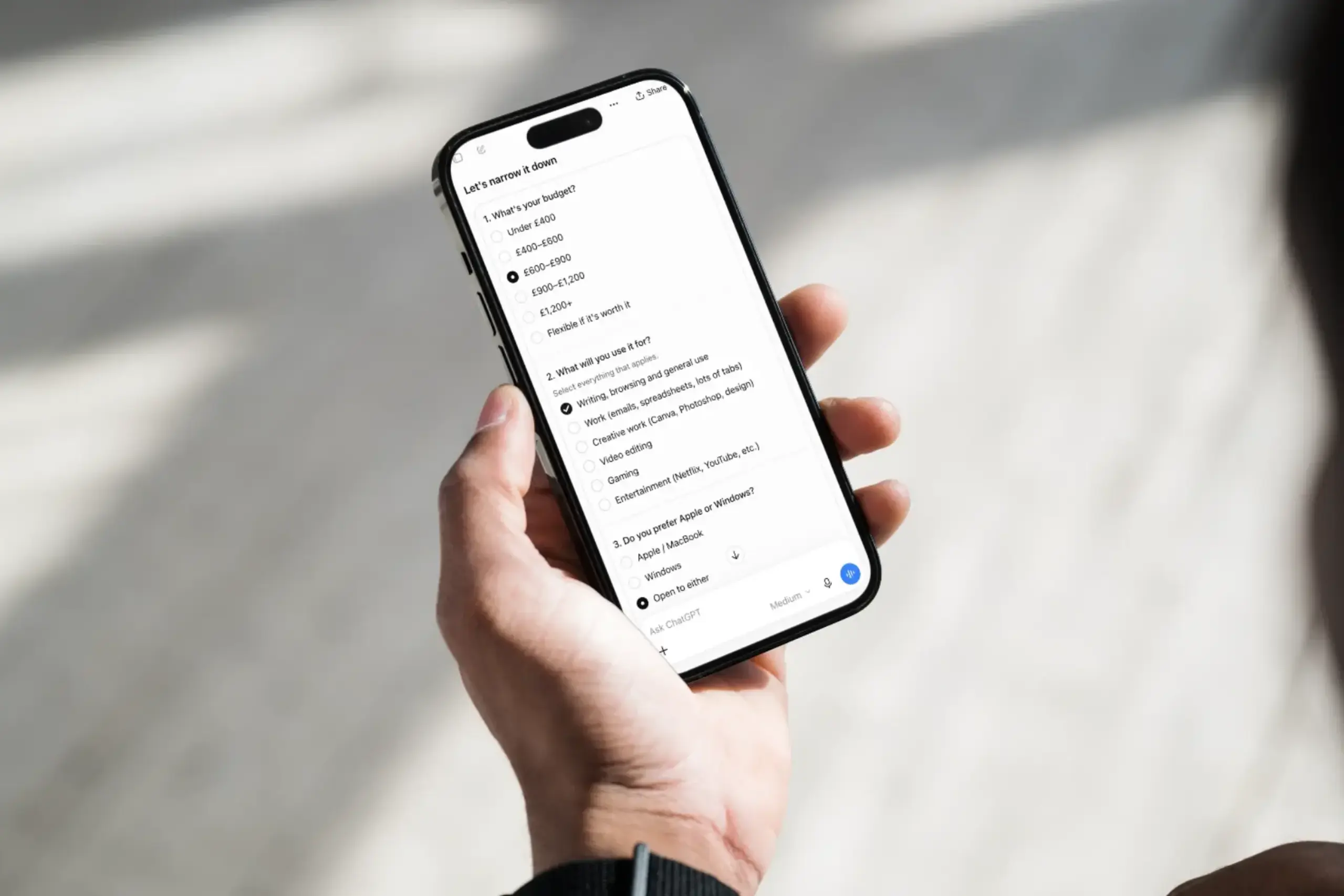
ChatGPT latest release introduces a more interactive way of exploring and consuming information. Rather than relying on purely written responses, it can now create visual comparisons, interactive tools and experiences tailored to the user’s question
Imagine asking ChatGPT to help you choose a new laptop. It could now build a comparison of suitable models, allowing you to adjust your budget, prioritise battery life, or compare performance, with the recommendations updating as you go. You can explore the options and narrow down your choice without leaving the conversation.
As AI becomes more involved in how customers research, compare, and choose products, the information it can access and interpret becomes increasingly important. Product specifications, pricing, availability, reviews and the qualities that distinguish one brand from another all have a role in shaping the recommendations customers see, highlighting the importance of MX.
2. Google’s AI Max brings more control and transparency
Google has introduced new capabilities for AI Max, giving advertisers more ways to guide how AI manages and optimises their search campaigns. Marketers can now use natural-language briefs to communicate campaign objectives and priorities, while AI helps identify relevant searches, adapt ad creative and match customers with suitable landing pages.
Google is also improving reporting to show how search queries, creative assets and landing pages contribute to campaign performance. As AI takes on more of the decisions traditionally made by marketers, this additional visibility should make it easier to understand where budgets are going, assess what's working and make informed adjustments. It's a welcome development for advertisers looking to benefit from automation while retaining oversight of their investment.
3. Google brings Gemini 4 Argon to more users
Google has made Gemini 4 Argon available in the Gemini app and Google Cloud, extending access to its model for complex reasoning and longer tasks.
Google is positioning Argon for work involving multiple steps, large amounts of information, and more demanding problem-solving.
The significance of this announcement is accessibility. Advanced AI capabilities have limited practical value if businesses can't easily put them to work.
4. Google is giving websites more visibility inside AI Search
Google has further extended the capabilities of its AI Mode and AI Overviews, adding clearer inline links, dedicated sections for official websites, improved news carousels, and more information about creators.
The changes make it easier for people to explore original sources from within AI-generated answers.
Google is making links to the wider web more prominent within its AI experiences, giving brands and publishers another reason to pay attention to how their content appears in AI search, beyond whether it's cited.
5. Facebook users can tell the algorithm what they want
Meta introduced 'Your algorithm', giving Facebook users a more direct way to influence recommendations across Feed and Reels.
People can describe their interests in ordinary language, telling Facebook what they want to see rather than relying entirely on the platform to interpret their behaviour. Instead of spending weeks signalling an interest through likes, follows, and viewing habits, users can express their preferences directly.
6. Microsoft wants AI agents working inside Windows
Microsoft unveiled its plans for a new generation of Windows AI, combining AI that runs on a PC with more powerful cloud-based systems.
The announcement includes new tools for managing AI agents, while Copilot is being developed to use information from someone's PC and carry out tasks on their behalf.
7. Shopify lets merchants design stores by describing what they want
Shopify launched Canvas, giving merchants a visual environment for designing and customising online stores with its AI assistant, Sidekick.
Users can view pages together, make changes, or ask Sidekick to create and refine elements through conversation.
This makes store design more accessible to businesses without extensive development resources, reducing the technical work involved in building and updating an online shop.
8. TikTok gives advertisers more automation
TikTok announced new AI advertising tools, including automated keyword and creative selection for Search Ads, and the ability to bring together existing assets, AI-generated content, and creator videos for advertisers to review.
It's also updating its automated TikTok Shop advertising system to account for costs such as creator commissions, discounts and referral fees when optimising campaigns.
In the end...
There's plenty to pay attention to this month, but what's interesting is how quickly AI is finding its way into the everyday decisions we all make. From researching a product to comparing prices and making a purchase, more of that journey is happening within AI-powered experiences.
We're already seeing the commercial impact. IDHL's own research shows AI discovery contributing to measurable transactions and revenue, and these latest developments suggest there's plenty more to come.
For marketers, it's worth taking a closer look at how your brand is appearing in these experiences. What information is AI finding? Is it representing your products accurately? And are you giving it what it needs to recommend you when you're the right choice? If you need help with maximising your impact, speak to IDHL about our GEO solutions.