Tags
Wes Maynard, Managing Director at The MTM Agency – an IDHL company, introduces us to ‘the creative technologist’, the next stage of creativity in the AI-scape. This balanced blend of human-led ingenuity and technical fluency is the bridge to true performance as agentic tools begin to mature.
Listen up brands and creative leaders. We need to learn to use AI masterfully, not just ‘well’. While agencies should be embracing agentic workflows, the real differentiator is the same as ever – powerful ideas that make each product and service matter.
Take a look.
The creative technologist is a bridge, not a destination
My fascination with code began thirty-two years ago. I then moved into design. Then brand. Then digital. Then strategy.
That progression felt natural at the time, but I didn't realise I was living proof of something that has become urgent for every creative professional in 2025.
The technical skills I picked up early became my competitive advantage. Not because I planned it that way, but because the industry shifted beneath all of us.
The emerging skills gap for creative talent
When I interview creatives now, I'm looking for something different than I did five years ago.
Historically, the best creatives had a solid foundation in design history and understood trends that came and went. They read design blogs. They attended exhibitions. They stayed current through osmosis and curiosity.
That's not enough anymore.
Now I want to hear about their process, and that process needs to include AI. I want to know how they see that changing and what they're doing to stay current. The really good candidates talk about agentic AI and how they're building their own workflows.
Here's what I'm seeing in interviews: senior creatives at the top of their game understand this. Graduate-level creatives from university understand this.
The middle layer is vulnerable.
The next generation is coming armed with the tools and expectations of how they need to work. If you're in that middle layer with ten years of traditional experience, you need to prove that experience still matters.
At MTM, our approach is human-centric. We want our creatives in front of clients, meeting in person. Experience with client expectations remains valuable. The osmosis between technically fluent juniors and client-savvy seniors creates something powerful.
But only if the seniors actually absorb the technical skills instead of delegating them.
Using AI tools poorly versus using them well
When I talk to new client partners, I'm hearing a consistent pattern. Agencies aren't refusing to adopt AI tooling - they're using it poorly.
Quality of output is suffering across the market.
Here's what using AI poorly looks like: logging into Mid journey and giving a full prompt to produce a creative output. Done. Ship it.
Here's the alternative: creating an agentic production line of many agents, with each one focused on a single task or outcome. When you layer the ability to choose which LLM you use at each stage of that process, you have something powerful.
This transforms creative artworkers and designers into art directors.
The difference isn't subtle. Amazon's agentic AI tool reduces ad creative production from weeks and tens of thousands of dollars to hours at no additional cost. That's not incremental improvement. That's a fundamental shift in how creative work gets done.
But building multi-agent workflows requires understanding systems, logic, and process architecture. That's not traditional creative thinking. You're asking creatives to become systems designers.
I realised this while working hands-on with tools to build solutions for our client partners. It forced me to understand what's out there and the best ways to produce things.
The holding company platform race
The larger agency groups are doing something interesting. They're redefining themselves as platform companies, developing operating systems designed to automate production, media, and optimisation.
Stagwell built The Machine. Omnicom produced Omni. Havas has Converged.AI.
These aren't future plans. Stagwell is investing $20 million per quarter into AI integration. The Machine promises 15% cost savings and is scheduled for full network rollout by early 2026. At CES 2026, the vision converged: agencies as managed ecosystems of AI agents, built on proprietary data, wrapped in compliance, plugged into end-to-end marketing execution.
These agents provide speed, scale, and predictability. They make it possible to generate thousands of creative variations and optimise media in real time, but they also come with trade-offs. The outputs might be efficient – but they also become formulaic.
Brands work with agencies like IDHL and MTM to do the hard work of thinking for them, giving originality to AI outputs. Production sits in the middle. Then comes the strategic execution of how campaigns roll out.
Here's the thing everyone misses: at the moment, only the package differs. Everyone has access to exactly the same LLMs and agentic AI framework options.
The competitive advantage isn't about having technical skills. It's about how you apply them within a strategic context.
Why the creative part still matters
You might think I'm arguing for "strategic-technologist" or "systems-thinking creative" as the more accurate job description.
I'm not.
We can't lose the creative part of this role. Embracing cultural influences from society plays a huge part in design. Without a human, that's not going to happen with LLMs. Everything they're trained on exists in the past.
We need creative humans thinking about what's coming and how they can shape that creatively.
I stand by the term creative-technologist. At least until AI in creative tooling becomes commonplace in the future. That's ultimately where it will end up. The playing field will level once again.
These processes fast-track the visualisation of ideas. But you still need to have the ideas at the start. After being fed with insight, research, and understanding, that's still very much for humans to drive.
The idea is what matters. Making things matter.
What separates good from great when tools become accessible
When AI tools become commonplace and easy to use, what separates a great creative from an average one?
If everyone has the same accessible AI tools, what becomes the new scarcity?
The answer brings us full circle: the idea. The ability to make things matter.
Research shows that humans aren't being displaced, they're being elevated. The emphasis shifts from executing tasks to designing the systems that execute tasks. Skills like creativity, critical thinking, and emotional intelligence remain vital.
So why are we putting creatives through this technical gauntlet right now?
Because the tools aren't intuitive yet. We're in a transitional phase. The creative-technologist exists specifically because of this gap.
There’s a risk of over-rotating toward system designers and agentic workflow builders instead of strengthening creative thinking. I think about this balance constantly.
The answer is that these technical processes serve the idea, not replace it. Speed to output is the most visible signpost that AI is here to stay. Production timelines are being reduced by 80%. That efficiency creates space for more thinking, not less.
Amara's law and what comes next
I'm a huge believer in Amara's law: "We tend to overestimate the effect of a technology in the short run and underestimate the effect in the long run."
AI use is going to change, then change again before we see the full effect in the creative industries.
I'm certain there will be "another thing" in the not-too-distant future. The creative-technologist role is temporary. It's a bridge, not a destination.
Five years from now, when the tools have caught up and become intuitive, we'll look back at this messy middle period. We might miss parts of it. We'll definitely carry forward lessons we learned.
What's certain is that speed to output proves AI's staying power. The efficiency gains are undeniable. 79% of marketers chose increased efficiency as the top benefit of adopting AI. 83.82% report increased productivity since adoption.
But efficiency was never the end goal. The goal is making things matter.
What this means for your team
If you're hiring creatives right now, you face a choice.
You can wait for the tools to become easier. You can hope your traditional creative talent will adapt when forced to. You can assume the holding companies will solve this problem for everyone.
Or you can recognise that we're in a transitional phase that rewards early adopters.
The UK creative industries face a £400 billion AI skills gap. Research shows that by 2035, around 10 million workers will be in roles where AI is part of their responsibilities. Too many freelancers and smaller employers are using the technology without training, creating quality control issues.
The agencies that recognise this moment for what it is will have a competitive advantage.
At MTM, we're building teams where technically fluent juniors work alongside client-savvy seniors. We're investing in understanding agentic workflows and multi-agent systems. We're doing the hard work of thinking while using AI to accelerate production.
We're treating the creative-technologist as a bridge to cross, not a destination to reach.
Because on the other side of this bridge, when the tools become intuitive and accessible to everyone, the playing field levels again. And the thing that matters most will be the thing that always mattered: the quality of the idea and the ability to make things matter.
The creatives who survive this transition won't be the ones with the best technical skills. They'll be the ones who used technical skills to protect and amplify their creative thinking.
That's the balance worth fighting for.
Take the next step with IDHL Labs
IDHL Labs brings together experts like Wes from across IDHL, MTM, Fostr, and Vervaunt to design, test, and scale AI. Our connected suite of tools enhances our technical fluency with the power of creative minds behind it to ensure improvement of the outcomes that matter most. Get in touch to learn more about our applied AI.

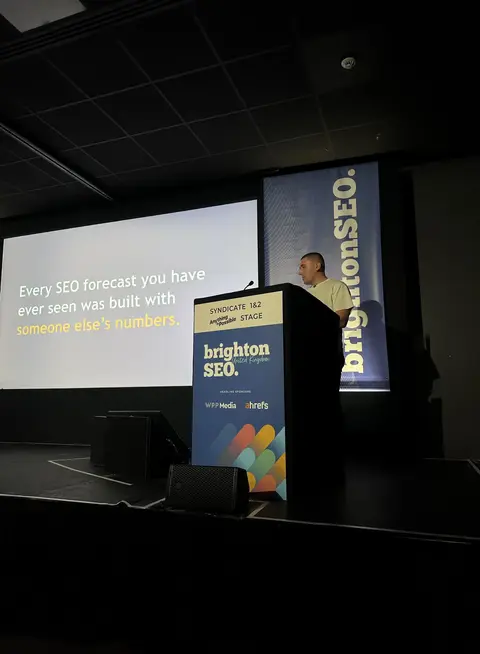
Wes Maynard
Managing Director, The MTM Agency
Wes Maynard is Managing Director of The MTM Agency, leading a multi-disciplinary team to deliver strategic, integrated marketing programmes. With over 20 years’ experience across development, brand, design and performance, he brings a well-rounded approach to client strategy. Wes is passionate about helping teams achieve great results and shaping the responsible use of AI. Outside of work, he’s sports-mad and enjoys football, cricket and golf.

.webp?language=en)