Tags
AI and browsers are merging
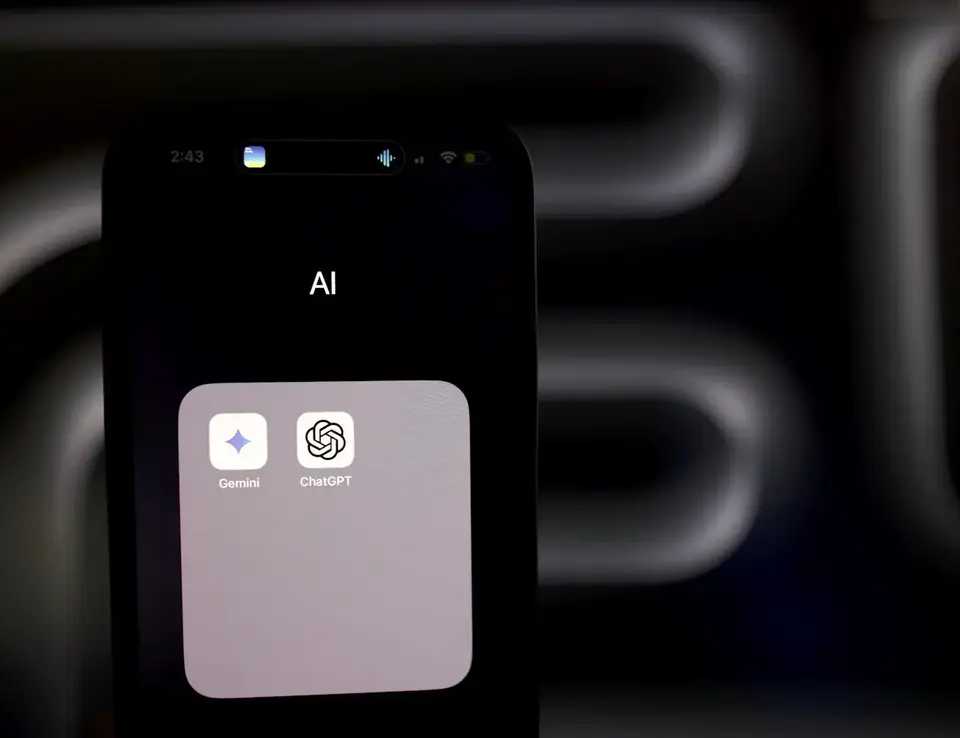
Recently, OpenAI announced the launch of their new Atlas browser. A browser with ChatGPT integrated. This launch sparked significant interest across the sector, as expected given OpenAI's large share of consumer AI use.
OpenAI isn't the first to launch a browser with built-in AI. Perplexity launched their Comet browser in July, promising an intelligent tool that can perform actions on your behalf. With much less coverage, Microsoft announced Copilot mode in Edge (also in July with significant updates announced in October – possibly trying to compete with the Atlas launch).
LLM capability is hard to monetize directly
Although sounding similar, there are key differences between these offerings. More interesting than their strengths and weaknesses is what these product launches signal about AI tooling's direction.
Frontier models are maturing, and improving them further is costly and time-consuming compared to the immediate benefit. Several models now perform at levels similar to GPT5. The competitive edge is moving beyond pure model capability.
For AI companies monetizing base LLM capabilities, market commoditization presents a challenge. Developing value-added features is now a necessity, not a luxury. OpenAI shows this with recent checkout features in ChatGPT. Though still early and unproven, it points toward profitable business models and innovation beyond mere generative power.
Are LLMs powerful engines still looking for a home?
AI vendors are still learning how users prefer to use AI tools. How often users continue returning once the initial excitement fades is unclear. If users won't come to your platform, bring your platform to them.
A great car needs an excellent engine, but few buy a car just for the engine – even fewer buy the engine alone. LLMs offer exceptional processing, but alone lack broad usefulness. When paired with a comfortable seat and attractive chassis, the chance to excite engineers and the public is immense.
So launching new browsers shouldn't be surprising. Given Chrome’s dominance, it’s an interesting gamble – but so were Internet Explorer and Netscape Navigator until more compelling options arose. Perplexity’s $35b offer to Alphabet shows strong belief in browser-led AI.
User interfaces evolve rapidly to meet needs
As users become accustomed to LLM tools, they realize context matters for every prompt. Single-thread chats have limited value; users want to pool info to build broader context – especially in business, where LLM revenue is biggest.
Many users are discovering “Projects” (ChatGPT and Claude), “NotebookLM” (Gemini), and “Notebooks” (Copilot). These micro RAG (Retrieval Augmented Generation) systems allow LLM use for specific clients or projects. This is a more scalable, user-focused approach than custom GPTs or agents. Currently, these solutions depend on referencing or uploading materials to AI platforms, causing inefficiencies for organizations with structured storages and taxonomies.
All this means user interfaces aren’t yet optimized for the most powerful, useful cases.
Separating UI from LLM opens strong opportunities
Microsoft’s Copilot tackles this challenge. It uses the same GPT5 LLM OpenAI developed for ChatGPT. Effectively, it’s an alternative ChatGPT interface, routed through enterprise security (reducing risks in AI) and embedded within daily enterprise tools (Outlook, Word, Excel, PowerPoint, OneNote, Teams, etc.). The current integration offers both opportunities and refinement areas, but the thinking and rapid feature rollout are clear.
More proof of separating LLM and UI appears in the new Office Agent from Microsoft. Not yet available in the UK, it looks promising. Instead of OpenAI’s LLM, it uses tools from Anthropic. One UI, multiple LLMs. This trend indicates a shift toward flexible LLM integration models.
Business and consumer applications seem likely to diverge
From a business user perspective, it seems likely that the creators of the software users interact with daily are best positioned to take short-term advantage. That means Microsoft and Google. Google's edge currently is that they've been developing their own LLM capability for a comparatively long time. Gemini ranks as one of the best engines available and is becoming seamlessly integrated into Google’s product suite.
Conversely, Microsoft’s advantage may be in an LLM-agnostic approach. At present, they access the dominant LLM through their relationship with OpenAI, but if partnerships with Anthropic and others continue, things could get very interesting. Organizations might gain the capability to integrate custom LLM features into the Copilot toolset, enabling corporate clients to differentiate using AI. For example, a law firm could deploy a specific England and Wales law LLM directly into their existing integrated tools, rather than building separate agents atop someone else’s pretrained generic LLM.
From a consumer viewpoint, the picture is likely different. ChatGPT still dominates this space, and currently nothing seems poised to challenge this lead. It seems probable that ChatGPT will monetize by licensing its capabilities to third parties (e.g., Microsoft), selling advertising, and leveraging affiliate partnerships like the one announced with Stripe.
Changes in AI are not yet done
It’s clear the battleground for AI vendors is shifting from who builds the most powerful engine to who creates the most useful user interface. This shift opens new opportunities and signals ongoing momentum in AI innovation.
Navigating the next chapter of AI with IDHL
As AI tools and interfaces evolve, the real opportunity lies in linking technology with real user needs. Get in touch with our experts to turn insights into business action.