Tags
In the past 12 months, AI has shifted from curiosity to a daily fixture across agency creative teams worldwide. Some practitioners are unlocking new levels of pace and possibility. Others are wrestling with inconsistent quality and uncertain value. The gap between the two will widen over the next year, and it will be shaped not by who uses AI
83% of creative professionals have integrated AI into their workflows. That's not a future trend. That's today. And if you're leading a creative team or managing marketing for your organisation, you need to understand what this transformation actually means for the work you do.
AI is becoming exceptionally accomplished at the execution phase: It can generate countless variations, automate repetitive tasks, and accelerate production timelines. What it hasn't done is replace the human ability to generate original ideas, understand emotional context, or build the strategic frameworks that drive meaningful brand growth.
The current state: AI as an amplifier, not originator
The data tells a clear story about where we are right now.
Content marketing teams save approximately 11.4 hours per week per employee using generative AI. That time doesn't disappear. It gets redirected towards strategic thinking, client relationships, and the kind of creative problem-solving that machines can't replicate.
The sensible trend in agencies at the moment seems to be to let AI to handle the mechanical parts of creative work. Resizing assets for different platforms. Generating initial copy variations for A/B testing. Producing first-draft layouts that human designers then refine. 86% of organisations report revenue growth of 6% or more after integrating AI into creative processes.
The revenue growth isn't coming from replacing humans with machines. It's coming from freeing humans to focus on higher-value work.
But, it’s not all as rosy as it sounds: 35% of agencies cite concerns about compromised creative quality as their top challenge with AI adoption. This concern is valid. When you optimise for speed and efficiency, you risk losing the nuance, emotion, and strategic depth that separates memorable work from forgettable content.
What's happening in the next 12 months
The creative industry is entering a critical phase of experimentation.
97% of creatives learn AI tools through self-experimentation rather than formal training. This matters because the agencies that encourage systematic experimentation right now will build competitive advantages that compound over time.
I'm seeing three distinct approaches emerge:
The resisters are avoiding AI tools entirely, hoping the trend will fade or prove less disruptive than predicted. This approach carries significant risk. The technology isn't going away, and clients are increasingly expecting AI-enhanced efficiency.
The adopters are implementing AI tools without clear strategy, using them because they feel they should rather than because they've identified specific value. This creates inconsistent results and often reinforces concerns about quality compromise.
The integrators are taking a measured approach. They're testing AI tools across different parts of their workflow, documenting what works, and building processes that combine AI efficiency with human creativity and strategic thinking.
The integrators are winning. This is what IDHL Labs is all about.
58% of professionals plan to increase AI use for creative generation in the next year, along with expanded use in chatbots, targeting, and forecasting. The question isn't whether to adopt AI. The question is how to adopt it in ways that enhance rather than diminish your creative output.
The consolidation that's coming
The creative AI landscape looks chaotic right now. Hundreds of tools promise to revolutionise different aspects of creative work. New platforms launch weekly. Features overlap. Capabilities blur together.
This won't last.
The creative tech sector has seen significant consolidation activity in 2025, aimed at consolidating IP and scaling AI expertise. The market is moving towards a smaller set of dominant platforms, similar to how Amazon consolidated e-commerce and Google consolidated search.
I expect we'll see three to five major AI creative platforms emerge as industry standards over the next 18-24 months. These platforms will offer integrated capabilities across design, copywriting, video production, and campaign management.
Agencies that build expertise with these emerging platforms now will have significant advantages. They'll understand the tools' capabilities and limitations. They'll have refined workflows. They'll know when to use AI and when human creativity delivers better results. IDHL Labs will allow us to plan strategically, test with purpose and ensure we have the knowledge required to be a leader in the space when the dust settles.
Leading agencies are more advanced than advertisers in AI adoption across marketing use cases, from measurement and insights to creative and content. This gap will widen as consolidation accelerates. Through IDHL Labs, we will be positioned to capitalise on this advantage for our client partners.
What this means for creative agencies
The role of creative agencies is shifting, not disappearing.
62% of marketers believe generative AI will augment human creativity, enhancing unique human qualities such as intuition, emotion, and context understanding. This belief aligns with what I've seen in practice.
The agencies thriving in this transition are redefining their value proposition around three core capabilities:
- Strategic thinking becomes more valuable, not less. AI can generate content variations, but it can't determine which strategic direction will resonate with your specific audience in your specific market context. It can't identify the emotional drivers that turn awareness into loyalty.
- Creative direction and curation matter more than ever. When AI can generate hundreds of options in minutes, the ability to recognise which option captures the right tone, message, and emotional resonance becomes the differentiating skill.
- Integration and orchestration across channels, platforms, and touchpoints requires human judgement. AI tools excel at individual tasks, but connecting those tasks into coherent brand experiences requires strategic oversight that understands business objectives, audience psychology, and market dynamics.
The agencies that position themselves as strategic partners who happen to use AI tools will outperform agencies that position themselves as AI tools that happen to employ humans. One of the founding principles of IDHL Labs is that AI will make our people better. It will act as an accelerator, making our skilled specialists even better.
The governance gap that needs addressing
Here's a problem that's not getting enough attention: AI governance remains unclear in many agencies, with most lacking formal oversight structures.
This governance gap creates real risks around brand consistency, data privacy, intellectual property, and quality control. It also creates opportunity for agencies that establish clear AI governance frameworks.
With the launch of IDHL Labs, we are setting a clear marker and position. Our focus will be innovation and our processes will be transparent for our client partners and colleagues across IDHL.
It will be essential for clients to know how you're using AI in their work. They need transparency about what's human-created and what's AI-assisted. They need assurance that their data, brand voice, and strategic positioning remain protected and consistent.
The agencies building robust AI governance frameworks now, like us, will differentiate themselves as responsible partners who understand both the capabilities and the limitations of these tools.
Real-world impact: what the numbers show
The theoretical benefits of AI sound compelling. The practical results are even more convincing.
AI campaign deployment times can be reduced by up to 50%, with documented cases showing improved click-through rates and significant cost reductions. These aren't marginal improvements. They're transformational results that change what's possible within budget and timeline constraints.
But here's what the numbers don't capture: the human judgement required to achieve those results. The AI didn't decide which audience to target, which message would resonate, or which creative approach would break through competitive noise.
Humans made those decisions. AI accelerated execution. This growth represents both opportunity and disruption, depending on how you respond.
What IDHL Labs will be doing in the next 12 months
If you're leading a creative team or managing marketing for your organization, here's what I recommend:
We will experiment systematically
We won’t sit around waiting for the market to settle. We will run controlled tests across multiple AI platforms, model types and workflow configurations. Every experiment will be documented, benchmarked and fed back into a live knowledge base that improves group-wide performance. This creates compounding advantage: institutional intelligence that no competitor can replicate.
We will formalise AI governance
Labs will define, implement and maintain the group-wide AI governance framework. That includes rules of use, client transparency protocols, data privacy protection, IP guardrails, model-selection criteria and automated compliance checks baked into workflows. Everyone working through IDHL Labs will operate with clarity and zero ambiguity.
We will build strategic firepower
As execution becomes increasingly automated, Labs will double down on what machines can’t replace: strategic insight, behavioural understanding and systems-level thinking. We will train and equip teams across the group to elevate briefs, sharpen propositions and craft creative and comms that move people emotionally and commercially.
We will engineer hybrid workflows
Labs will design, test and deploy integrated human plus AI workflows across strategy, creative, content, UX, dev and performance. This isn’t “AI in the corner.” This is AI embedded into production lines, with clear rules about when human judgement leads, when automation accelerates, and how the two compound output, speed and quality.
We will stay outcome-obsessed
We are not here to “use AI.” We are here to drive measurable client partner impact. Every AI deployment will be tied to a performance goal: lower cost, faster delivery, higher quality, improved conversion, stronger brand consistency or better insight extraction. If AI improves the outcome, it stays. If human work outperforms, we default to human.
The optimistic view
I'm optimistic about where this transformation leads.
The creative professionals I know didn't enter this field to resize assets or generate copy variations. They came to solve interesting problems, build meaningful brands, and create work that resonates with real people.
AI handles the mechanical work, freeing creative professionals to focus on what they do best: strategic thinking, emotional intelligence, and original ideas that connect brands with audiences in meaningful ways.
The agencies that embrace this shift, like we are, while maintaining their focus on human creativity, strategic depth, and client partner relationships will thrive. The agencies that resist change or adopt AI without strategic purpose will struggle.
The next 12 months will separate these two groups.
.webp?language=en)
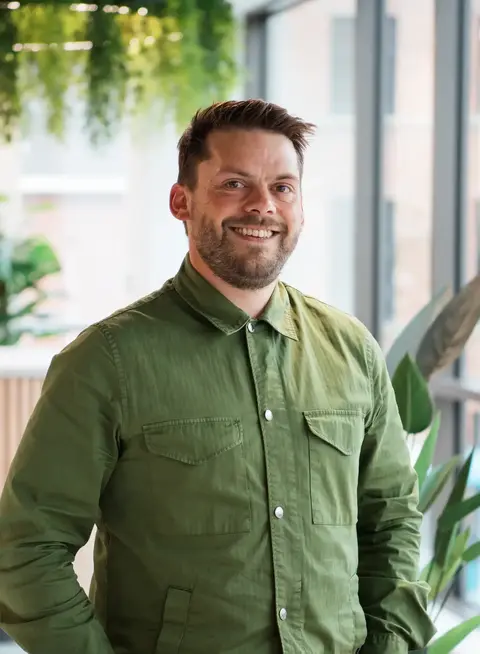
Wes Maynard
Managing Director, The MTM Agency
Wes Maynard is Managing Director of The MTM Agency, leading a multi-disciplinary team to deliver strategic, integrated marketing programmes. With over 20 years’ experience across development, brand, design and performance, he brings a well-rounded approach to client strategy. Wes is passionate about helping teams achieve great results and shaping the responsible use of AI. Outside of work, he’s sports-mad and enjoys football, cricket and golf.