Tags
ChatGPT is quickly becoming part of how people work things out. Not just answering questions, but helping them narrow options, compare choices and decide what to do next. This shift matters for brands because it changes where and when influence happens.
OpenAI has now taken a further step in that direction. It confirmed last week that it will begin testing advertising inside ChatGPT in the US, starting with the free and Go tiers.
For anyone responsible for growth, brand or trading performance, the significance sits less in the mechanics of advertising and more in what happens when decision-making moves closer to the moment of conversation.
What’s changing?
ChatGPT is trying to be the place where intent is formed. Planning a trip. Comparing products. Working out what to buy next. These activities already happen inside conversational interfaces. OpenAI’s move formalises a pattern that is already established: discovery, recommendation and transaction compressed into fewer steps.
OpenAI has also been clear about the boundaries. Ads sit outside the answer. Conversations remain private. Responses are driven by usefulness rather than commercial influence. The value of ChatGPT comes from the confidence it gives people to make decisions, so any erosion of that trust would undermine the entire experience.
For commerce brands, this creates an environment where clarity and credibility matter more than volume. Confusion carries a higher cost, and relevance must be earned.
Why this matters for brands
When people ask a question in ChatGPT, they are often closer to a decision than when scrolling a feed or typing a broad search query. Any commercial presence, therefore, carries more weight.
The response is not to rush into new formats. It is to be ready to be understood in conversational contexts. That means product information that is clear and consistent. Propositions that make sense quickly. Policies, pricing and availability that stand up when revealed in a single moment, rather than scattered across multiple pages. This is where many businesses will feel the change first. Less through media buying, and more through the strength of their fundamentals.
A platform built around usefulness
One of the most important aspects of OpenAI’s announcement is its emphasis on usefulness. There is no focus on maximising attention or extending time spent. The experience is designed around helping people reach decisions they are comfortable acting on.
That sets a high bar for advertising. Any brand presence in this environment has to justify itself through relevance to the task at hand.
Jonathan Healey, Group Technology Director at IDHL, puts it this way:
OpenAI is setting a clear expectation around usefulness. Monetisation has to fit around that. For brands, that raises the bar. If you appear in a conversational moment, you need to be there with information that genuinely helps someone decide. This places more emphasis on preparation than on creative tricks. Ultimately, substance carries more weight than novelty, as it should.
The commerce implications
For commerce teams, this is where theory meets reality. When a recommendation happens inside a conversation, stock, pricing, delivery and returns need to line up immediately. If they don’t, the moment passes.
Josh Duggan from Vervaunt puts it plainly:
When someone is already asking an assistant what to buy, they’re not in browsing mode. They’re close to a decision. If the information isn’t clear or something doesn’t add up, it completely undermines the brand's position, and users are likely to just move on – which is why conversational environments expose weaknesses so quickly. Gaps that were previously hidden across multiple steps become obvious in seconds.
The infrastructure is catching up
Another important aspect of this, and what makes this moment different, is that the underlying commerce infrastructure is now being built to support it.
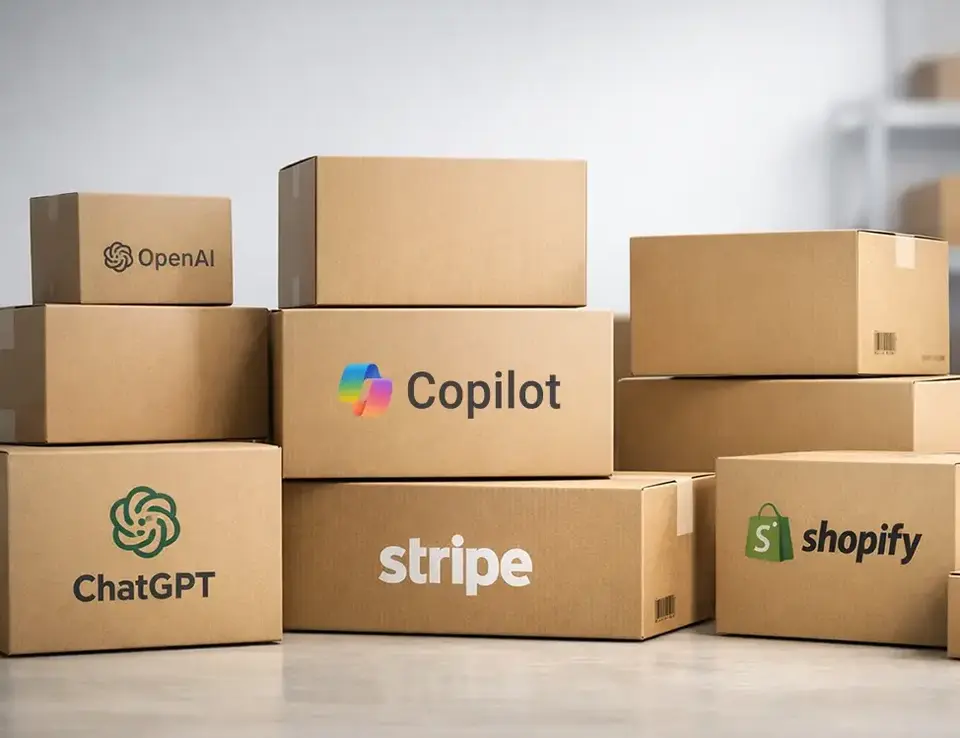
Alongside OpenAI’s move, platforms are wiring conversational discovery directly into checkout. Microsoft has announced Copilot Checkout, enabling purchases inside Copilot, with Stripe enabling the checkout experience. Stripe is also developing the Agentic Commerce Protocol (ACP), an open standard intended to help AI-driven commerce experiences connect to merchants and handle real checkout complexity consistently. At the same time, Shopify has introduced its Universal Commerce Protocol (UCP), designed to let AI systems manage products, pricing, promotions, payments and fulfilment inside conversations, while keeping merchant control and clean attribution.
These are complementary ideas. One side focuses on where people ask and decide. The other focuses on making sure those decisions can actually be carried through to purchase without friction. The result is that the gap between “help me choose” and “help me buy” is shrinking fast.
What brands should focus on now
Right now, this does not require immediate structural change. The sensible response is practical and measured.
Start with accuracy and consistency. Product data, content and policies need to align wherever they appear. If an assistant has to explain your offer on your behalf, it should be able to do so cleanly.
Be deliberate about where conversational discovery makes sense. Not every product or journey belongs in a chat environment.
Continue to invest in brand. As journeys compress, familiarity and trust carry more weight. When time is limited, people lean on what already feels dependable.
Putting this in context
Advertising inside ChatGPT reflects conversational interfaces becoming a normal part of how people explore options and make decisions. The moves from Shopify and Microsoft show that the practical pieces are being put in place to support purchase inside those environments.
The brands that do well here will be easy to understand, consistent in how they show up, and ready to support decisions when conversations turn into choices.
.webp?language=en)
Richard Broughton
Brand and Strategy Director, The MTM Agency
Richard Broughton is Group Marketing Director at IDHL, leading the business’s marketing strategy across brand, campaigns, content, events and thought leadership. With a background in PR, brand strategy and creative development, he helps the business tell a clear, compelling story that connects strategy with execution. Richard is passionate about brand positioning, creative campaigns and leveraging AI to enhance marketing effectiveness. Outside of work, he enjoys photography, literature and exploring architecture.